Defining the ETH Conspiracy Narrative
In market research, the term "ETH conspiracy" doesn't refer to a secret plot, but rather to unfounded claims of market manipulation that circulate in crypto discourse. These narratives often center on the idea that large holders—known as whales—or authorized participants are artificially suppressing or inflating Ethereum's price. While these stories capture attention, they rarely hold up under scrutiny. Our goal here is to separate signal from noise, using data to debunk myths rather than validate them.
The most common accusation is that a small group of whales controls the market. Ethereum co-founder Joseph Lubin has pointed to whale activity as a concern, noting that large holders can exploit economic turmoil to move prices. However, this perspective often overlooks the broader ecosystem. The surge in institutional demand for ether is driven by fundamental shifts, such as the rise of spot ETFs and staking yields, not by coordinated manipulation. Attributing price action solely to whale behavior ignores the complex interplay of supply, demand, and macroeconomic factors.
Another recurring theme involves authorized participants (APs) and ETF structures. Critics argue that APs manipulate the creation and redemption of shares to influence ETH's price. While APs do play a role in market efficiency, there is no evidence of systematic manipulation. Instead, their activities help align ETF prices with the underlying asset's value. Understanding this mechanism is crucial for investors who want to make informed decisions based on reality, not rumor.
By focusing on official sources and primary data, we can cut through the noise. The "conspiracy" is often just a misinterpretation of normal market dynamics. When we look at on-chain data, institutional flows, and developer activity, a clearer picture emerges. Ethereum's price is influenced by a wide range of factors, from network upgrades to global regulatory changes. Blaming a shadowy group of manipulators is a convenient shortcut, but it's not a strategy for long-term success.
Verifying infrastructure claims
The Ethereum ecosystem moves fast, and with that velocity comes a constant stream of rumors, half-truths, and speculative upgrades. For anyone holding significant capital or relying on the network for critical operations, distinguishing between actual protocol changes and noise is a high-stakes skill. You cannot afford to act on Twitter threads or anonymous Discord leaks. You need to verify infrastructure changes using on-chain data and official research channels.
This section walks you through a rigorous verification process. By following these steps, you can confirm whether a claimed upgrade is real, assess its impact on network security, and understand the financial implications for ETH holders.
The primary source for any Ethereum infrastructure change is Ethereum Research. This forum is where core developers, researchers, and client implementers discuss EIPs (Ethereum Improvement Proposals) and protocol upgrades. Before accepting any claim about a network change, search this site for the specific EIP or technical term. If it is not documented here, it is likely not an official protocol change. Look for the status of the proposal: is it in the "Draft" phase, or has it been merged into a client codebase?

An EIP on a forum is just a discussion. The real verification happens when the code is merged into major Ethereum clients like Geth, Nethermind, or Erigon. Check the GitHub repositories for these clients. If the code for a claimed upgrade is not present in the main branches of at least two major clients, the upgrade is not live. This step prevents you from reacting to theoretical upgrades that may never be implemented or may be abandoned by the community.

Once an upgrade is live, its impact is reflected in on-chain data. For example, if a change is claimed to reduce transaction fees, look at the actual gas price trends and total fees paid on Etherscan. A useful tactical indicator, as noted by Charles Schwab, is dividing ETH's market capitalization by the sum of all fees generated on the platform. This ratio can help you gauge whether the network is becoming more or less efficient relative to its valuation. Use tools like Dune Analytics or Nansen to visualize these metrics before and after the upgrade date.
Infrastructure changes often affect the security model of the network. For upgrades related to consensus or staking, monitor the ETH staking ratio and the distribution of validators. A sudden drop in staked ETH or a concentration of validators in a single pool can signal centralization risks introduced by a new protocol change. Official client release notes often highlight these security implications, so cross-reference your on-chain observations with the official documentation.
By following this disciplined approach, you separate signal from noise. You protect your capital from reacting to false narratives and position yourself to benefit from actual, verified improvements to the Ethereum infrastructure.
Spotting red flags in reports
When analyzing crypto infrastructure, you are often sifting through noise. Reports that feel too perfect or too convenient usually are. The difference between a legitimate market analysis and a conspiracy theory often comes down to source transparency and data integrity.
Cherry-picked data
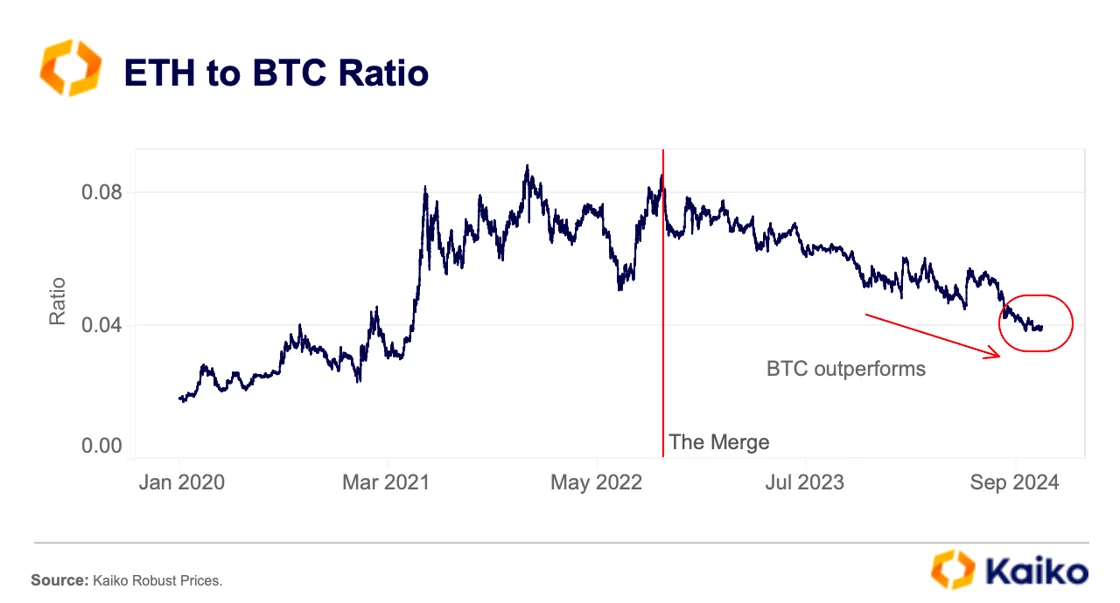
Misinformation thrives on selective evidence. A common tactic is highlighting a single week of outperformance while ignoring the broader trend. For example, some narratives focus exclusively on short-term ETH/BTC ratio fluctuations to claim market manipulation, ignoring the structural reasons behind the spread.
Always check the time horizon. If a report cites a specific date range that supports its thesis but excludes the preceding or following months, treat it with skepticism. Real infrastructure analysis requires a full cycle view, not just the highlights reel.
Lack of primary sources
Credible reports cite their data directly. They link to on-chain explorers, official exchange filings, or primary research papers. If a report relies on "industry insiders" or anonymous sources without providing verifiable links, it is likely speculation.
Research from Georgia Tech has identified billions in illicit profits on Ethereum, but these findings are backed by detailed wallet tracking and public blockchain data. In contrast, conspiracy theories about firms like Jane Street manipulating prices often lack this level of granular, public evidence. Demand primary sources.
Emotional language
Financial infrastructure is technical. Reports that use emotionally charged language—words like "rigged," "scam," or "conspiracy"—are often trying to sell a narrative rather than explain a mechanism. Legitimate analysis remains neutral and focuses on metrics.
Building a 2026 research strategy
Market research in 2026 requires a shift from reactive speculation to structured, official-source validation. The noise floor in crypto is higher than ever, making it easy to mistake social sentiment for structural reality. To build a sustainable strategy, you must anchor your analysis in primary data rather than secondary commentary.
Prioritize Official Protocol Sources
Your primary anchor should be the protocol itself. Ethereum’s development is documented openly on ethresear.ch, where core engineers and researchers discuss technical upgrades, security models, and consensus mechanisms. This is where the truth lives, before it gets filtered through media outlets.
When analyzing Ethereum’s trajectory, rely on on-chain data and official client specifications. These sources provide the "ground truth" of network activity, fee markets, and validator behavior. Speculative blogs often interpret this data through a lens of bias or outdated narratives. By going straight to the source, you remove the intermediary noise.
Separate Signal from Noise
Not all information is created equal. A comparison of data sources reveals a clear hierarchy of reliability:
| Source Type | Reliability | Best Use Case |
|---|---|---|
| Official Protocol Docs | High | Technical architecture, upgrade timelines, and security assumptions |
| On-Chain Analytics | High | Real-time network activity, fee markets, and validator health |
| Major News Outlets | Medium | Broad market context and regulatory developments |
| Social Media & Blogs | Low | Sentiment tracking only; never for factual verification |
Monitor Live Market Data
While fundamental research is critical, you must also track real-time market conditions. Price action and volatility are part of the infrastructure landscape. Use provider-backed widgets to monitor live prices and technical charts, ensuring your research is grounded in current market reality rather than historical abstractions.
Avoid Reactive Speculation
The biggest risk in market research is reacting to short-term price movements rather than long-term structural shifts. A sustainable strategy focuses on durable trends: adoption curves, developer activity, and regulatory clarity. Ignore the daily noise. Stick to the data. Let the protocol speak for itself.
Common questions about ETH research
Verifying Ethereum’s infrastructure requires separating technical reality from market noise. Below are the most frequent questions regarding verification, conspiracy claims, and institutional adoption.
When researching, prioritize data over speculation. If a claim lacks a direct link to an official Ethereum repository or a primary source statement, treat it as unverified noise.
No comments yet. Be the first to share your thoughts!