Defining the eth conspiracy framework
The term "ETH conspiracy" often conjures images of shadowy figures pulling strings behind the scenes, but in the context of crypto market research, it refers to something far more tangible: the invisible machinery of institutional adoption and infrastructure shifts. It is not a plot to manipulate prices, but a structural narrative driven by the gradual integration of Ethereum into the broader financial system.
This shift is primarily fueled by the surge in institutional demand for ether. As VanEck and other major financial entities have noted, Ethereum functions less like a simple currency and more like a decentralized "app store" for finance. The narrative around the "ETH conspiracy" is really about the market recognizing this utility. It is the realization that Ethereum is becoming the settlement layer for global assets, a transition that happens quietly in the code and on-chain data long before it hits the headlines.
Dmitry Buterin, Ethereum’s co-founder, has addressed the rumors surrounding the network, clarifying that the foundation’s actions are driven by protocol upgrades and ecosystem health rather than hidden agendas. The "conspiracy" is simply the market reacting to these fundamental shifts—ETF approvals, layer-2 scaling, and staking yields—that make holding ether increasingly attractive to traditional capital.
To understand this narrative, you need to look at the data, not the rumors. The following sections will break down the specific on-chain metrics and infrastructure developments that validate this institutional thesis, moving beyond speculation to observable reality.
Compare on-chain research tools
Finding the right data source depends on what you are tracking. Some tools excel at identifying who is moving funds, while others focus on network health metrics. Below is a direct comparison of three major platforms used in on-chain analysis.
| Tool | Primary Focus | Pricing Model | Best Use Case |
|---|---|---|---|
| Dune Analytics | Custom SQL queries | Freemium | Deep, custom data extraction |
| Nansen | Wallet labeling | Subscription | Tracking smart money |
| Glassnode | Macro metrics | Subscription | Market cycle indicators |
Dune Analytics is the standard for raw data. You write SQL queries to pull specific transactions. It is free to start, but complex queries require premium credits. It is ideal if you need to build your own dashboards or verify specific contract interactions.
Nansen focuses on labeling wallets. It tells you which addresses belong to VCs, exchanges, or influential traders. This is useful for tracking "smart money" flows without needing to decode every transaction manually. It requires a paid subscription for full access.
Glassnode provides high-level macro indicators. It tracks things like exchange reserves and miner behavior. It is less about individual transactions and more about the overall health of the Ethereum network. It is best for understanding broader market trends rather than specific token movements.
Reading the chain for institutional signals
The "ETH conspiracy" isn't a secret plot; it's a pattern of accumulation that happens before the price reacts. Institutional players move in silence. They don't announce their buys on social media. They use the blockchain itself to signal their intent. By tracking specific on-chain metrics, you can spot these large-scale shifts before they hit the order books.
Exchange flows and staking ratios
Watch where ETH is going. When large amounts leave centralized exchanges, it often means institutions are moving assets to cold storage or staking contracts. This reduces the circulating supply available for trading. Simultaneously, a rising staking ratio indicates long-term commitment. Validators don't stake for quick flips. They stake for yield and network security.
Look for divergence. If exchange balances drop while staking deposits rise, it suggests a structural shift in ownership. Retail traders usually keep funds on exchanges for easy access. Institutions lock them away. This quiet migration is the first clue that the "conspiracy" of accumulation is underway.
ETF inflows and market impact
Spotlight the ETFs. Inflows into spot Ethereum ETFs are the most visible institutional signal. When these funds grow, it means traditional finance is adding ETH to its balance sheets. Track these inflows daily. Consistent growth signals sustained demand. Sudden drops might indicate profit-taking or hedging by large players.
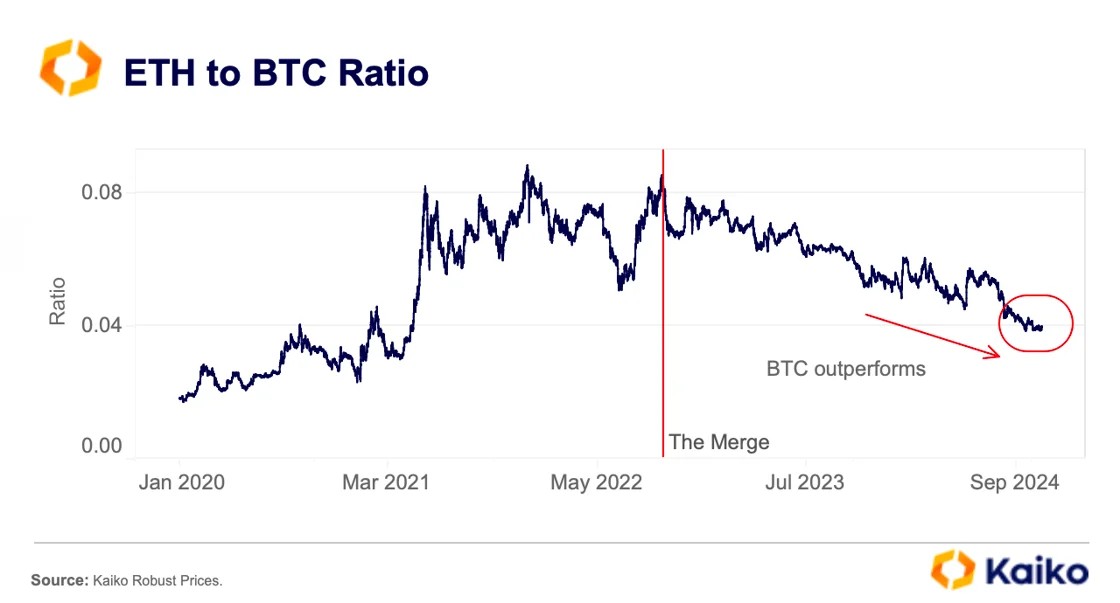
Combine this with price action. If ETF inflows rise while the price stagnates, it suggests strong absorption. Buyers are taking all the supply. This often precedes a breakout. The chart below shows how price interacts with broader market trends, reflecting these underlying flows.
Interpreting the data
Don't look at one metric in isolation. The real signal comes from the combination. High staking, low exchange balances, and steady ETF inflows create a powerful narrative. It shows that institutions are building a long-term position. They are not trading. They are accumulating.
Use this information to adjust your perspective. Instead of watching every tick, focus on the trend. If the chain shows accumulation, the price action will eventually follow. The "conspiracy" is simply the market revealing its hand, one block at a time.
Build a data-backed trading strategy
The "ETH Conspiracy" isn't a secret plot; it's a market narrative driven by specific on-chain behaviors and macro shifts. To trade it effectively, you need to separate signal from noise. This strategy synthesizes the research tools into a disciplined workflow for entry and exit.
The ETH/BTC pair is your primary compass. When this ratio bottoms out and begins to climb, it often signals that capital is rotating from Bitcoin into Ethereum. This rotation is the heartbeat of the conspiracy narrative. Use a TechnicalChart to monitor this pair alongside ETH/USD to confirm momentum.

Don't trade on price alone. Look for large wallet accumulation on-chain. If smart money is buying while retail is selling, the narrative is strengthening. Cross-reference this with staking metrics to see if validators are holding or distributing. Consistent accumulation without price spikes suggests a healthy buildup.

Staking yields provide a baseline for Ethereum's value proposition. Watch for changes in liquid staking derivatives (LSDs) like Lido or RocketPool. If LSD liquidity is draining or yields are dropping significantly, it may signal reduced confidence in the network's economic security. This is a critical risk signal.

Define your entry based on the ratio breakout and on-chain confirmation. Set your exit based on macro resistance or a breakdown in the ETH/BTC ratio. Use a price widget to track real-time levels. Never chase a pump; wait for the data to confirm the narrative is playing out as expected.
This approach removes emotion from the equation. By relying on the ETH/BTC ratio and on-chain data, you're trading the narrative's mechanics, not its hype. Stay disciplined, and let the data guide your position sizing.
Secure Hardware for Research
When you are digging into the mechanics of the ETH Conspiracy narrative, your digital footprint is the first thing to protect. Public blockchains are transparent by design, meaning every transaction is visible to anyone with the right tools. If you are conducting on-chain market research, you need to ensure your identity remains separate from your activity. This is not about hiding from the law; it is about maintaining professional integrity and preventing front-running or targeted attacks while you analyze market data.
Start with a dedicated hardware wallet. Devices like Ledger or Trezor keep your private keys offline, ensuring that even if your research computer is compromised, your assets remain secure. Think of it as a safe deposit box that never leaves your possession. Do not use an exchange wallet for long-term holdings or sensitive research operations. The moment you connect an exchange account to a research node or a complex dApp interface, you introduce unnecessary attack vectors.
For the research device itself, consider using a "burner" laptop or a virtual machine with no persistent storage. This isolates your primary computer from potential malware or browser fingerprinting scripts that might track your research habits. If you need to store large datasets or run local nodes, an air-gapped machine is the gold standard. It ensures that no network connection can leak your IP address or metadata back to the public blockchain explorers you are monitoring.




As an Amazon Associate, we may earn from qualifying purchases.
On-Chain Analysis FAQs
Understanding the mechanics of on-chain data helps separate signal from noise in the ETH Conspiracy narrative. While historical returns are tempting to analyze, the focus here remains on the tools that reveal current market structure.
For those looking at deeper historical context, Ethereum's inception in 2015 offers a stark contrast. Back then, a $1,000 investment at roughly $1.27 per coin would be worth nearly $3.4 million today. These figures highlight the magnitude of the network's adoption, but real-time on-chain metrics provide the actionable intelligence needed for current decision-making.
Accessibility to these tools is generally high, with many platforms offering free tiers for basic on-chain tracking. However, advanced narrative analysis often requires specialized data providers. The key is to use live data to verify trends rather than relying solely on historical price comparisons.
No comments yet. Be the first to share your thoughts!