What the ETH Conspiracy Guide Actually Covers
The phrase "ETH conspiracy" sounds like internet lore, but it points to a very real structural shift in Ethereum’s infrastructure. This guide uses the term to describe the hidden mechanics of how Ethereum is transitioning from a single, monolithic chain into a modular network of Layer 2 rollups and specialized data layers. Understanding this shift is essential for serious market analysis, as it redefines how ETH is used and valued.
For years, the narrative focused on simple price speculation. Today, the "conspiracy" is the quiet migration of activity to Layer 2 solutions like Arbitrum, Optimism, and Base. These networks handle the heavy lifting of transactions, while Ethereum mainnet serves as the settlement layer. This modularity reduces costs and increases throughput, but it also fragments liquidity and changes the demand dynamics for ETH itself.
The technical changes are complex. As Ethereum moves toward danksharding and statelessness, the way data is stored and verified is changing fundamentally. This isn't just a technical upgrade; it's a re-engineering of the network's economic engine. The goal is to make Ethereum scalable enough to support global applications without compromising decentralization or security.
This guide cuts through the hype to focus on these concrete infrastructure changes. We’ll look at how Layer 2 growth impacts ETH utility, why data availability matters for long-term value, and what these shifts mean for your market strategy. The "conspiracy" is simply the reality of a network evolving to meet global demand.
How the Ethereum Infrastructure Changed
The original vision for Ethereum was a monolithic beast: every node would execute every transaction, ensuring maximum security and decentralization. That dream has been replaced by a modular reality. The network is no longer trying to do everything at once; it is splitting tasks between Layer 1 (L1) and Layer 2 (L2) networks. This shift from a single chain to a layered ecosystem is the most significant structural change in Ethereum’s history.
This pivot centers on "The Surge," the phase dedicated to improving throughput and data availability through Danksharding. Instead of forcing all users onto the main chain, Ethereum now relies on rollups to bundle transactions. L1’s role has shrunk to a settlement and security layer, while L2s handle the heavy lifting of computation. This architecture allows the network to scale without sacrificing the security guarantees that make Ethereum unique.
The economic implications are stark. As L2s absorb transaction volume, the demand for ETH on L1 fluctuates differently than in previous cycles. The network’s value accrual is no longer tied solely to gas fees paid on the main chain. Instead, it is linked to the security budget provided by stakers and the data availability costs paid by rollups. This creates a more complex but potentially more sustainable economic model.
The divergence in market performance reflects this infrastructure split. While Bitcoin remains a standalone store of value, Ethereum’s utility is increasingly distributed across its L2 ecosystem. This structural change explains why ETH’s price action often lags behind BTC during broad market rallies; the market is pricing in the transition period rather than immediate yield.
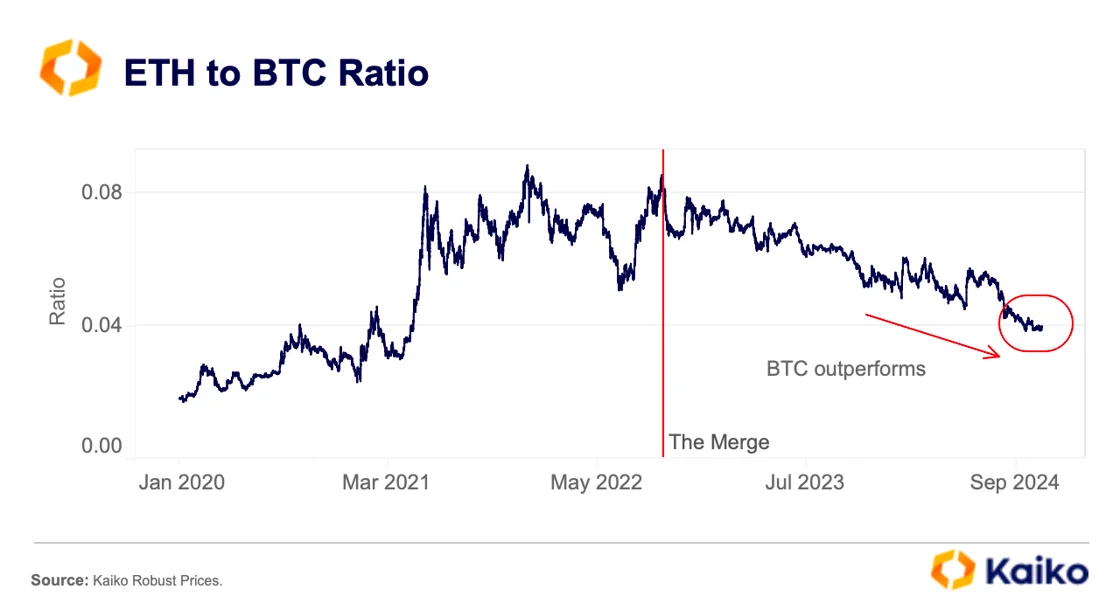
The technical roadmap, often summarized as The Surge, The Scourge, The Verge, and The Purge, is designed to make this modular system seamless. Danksharding, in particular, aims to lower the cost of data availability for L2s, making them cheaper and more efficient. This is not just a technical upgrade; it is a fundamental rethinking of how a global computer should operate.
Comparing market research views on Ethereum infrastructure
Evaluating Ethereum's infrastructure requires looking past the price action to understand the underlying utility and risks. Market research generally falls into three camps: those betting on the network as a global settlement layer, those warning of regulatory friction, and those analyzing the technical trade-offs of scaling solutions.
To provide current market context, here is the live price data for Ethereum:
The following table breaks down the core arguments from these distinct research perspectives. This comparison highlights how each view interprets the same infrastructure changes differently.
| Perspective | Core Thesis | Key Risks | Primary Focus |
|---|---|---|---|
| Bullish Infrastructure | ETH is the foundational settlement layer for global finance, similar to an app store for decentralized applications. | High gas fees during congestion; competition from other L1s. | Layer 2 scaling, staking yields, and network adoption. |
| Bearish Regulatory | The network faces existential threats from SEC classification and potential bans on staking services. | SEC enforcement actions; de-banking of crypto-native businesses. | Legal compliance, token classification, and institutional access. |
| Technical Scaling | Value is derived from Layer 2 rollups that use Ethereum for data availability while keeping costs low. | Fragmented liquidity; complex user experience across multiple chains. | Gas optimization, rollup efficiency, and cross-chain interoperability. |
Understanding these perspectives helps clarify why market reactions to Ethereum upgrades can be so varied. While bullish investors focus on the "app store" analogy for smart contracts, bearish analysts prioritize the legal uncertainties surrounding staking. Meanwhile, technical researchers scrutinize the efficiency of Layer 2 solutions that promise to reduce gas costs by up to 99.9% compared to the mainnet.
For investors, the key is recognizing which infrastructure narrative aligns with your risk tolerance. The bullish view assumes regulatory stability and continued developer growth, while the bearish view assumes increased government intervention. The technical view remains neutral, focusing purely on whether Layer 2s can deliver the promised scalability without sacrificing security.
Building an eth conspiracy strategy now
The shift from speculative hype to infrastructure maturity changes how you position capital. You are no longer betting on a narrative; you are backing a protocol layer that processes real value. This requires a strategy that prioritizes technical resilience and regulatory clarity over short-term price action.
Before adding leverage or complex derivatives, ensure the underlying Ethereum network is performing as expected. Look at transaction throughput and finality times on ethereum.org. If the base layer is congested or expensive, your strategy must account for higher gas costs or rely on Layer 2 solutions. Stability here is your foundation.

Regulatory clarity is the single biggest external variable. Keep an eye on how major jurisdictions classify ETH. Is it treated as a commodity or a security? This distinction affects institutional adoption and your own tax liability. A crypto-friendly administration can accelerate adoption, while restrictive policies can freeze liquidity.

Don’t just hold ETH. Consider exposure to the broader ecosystem. Layer 2 networks like Arbitrum or Optimism, and decentralized storage or oracle networks, are building the future of Ethereum. Diversifying across these layers reduces your risk if one specific protocol fails or loses market share.

Volatility is inherent to crypto. Use stop-losses and take-profit levels to protect your capital. Never invest more than you can afford to lose. A disciplined approach to position sizing ensures that a single bad trade doesn’t wipe out your entire portfolio. Remember, the goal is long-term survival, not quick riches.

The health of Ethereum is best measured by its developer activity. Are more people building on it? Are they contributing to the core codebase? High developer engagement is a strong indicator of long-term viability. Follow GitHub repositories and developer forums to gauge the pulse of the ecosystem.

Markets change. What worked last quarter might not work this one. Review your portfolio regularly. If one asset has grown significantly, it might now represent too large a portion of your holdings. Rebalancing helps you lock in profits and redistribute risk. It’s a boring but essential part of any serious strategy.

No strategy is foolproof. Have a plan for extreme market events. This could mean holding a portion of your portfolio in stablecoins or fiat currency. It could also mean having access to cold storage solutions that are secure and reliable. Being prepared for the worst allows you to stay calm when the market gets volatile.
This approach isn’t about predicting the future. It’s about building a resilient position that can withstand uncertainty. By focusing on infrastructure, regulation, and risk management, you’re setting yourself up for long-term success in the Ethereum ecosystem.
Common questions about eth infrastructure
Ethereum’s technical roadmap has shifted from a singular focus on scaling to a broader strategy centered on decentralization and security. Understanding these changes is essential for analyzing the network’s long-term viability and market trajectory.
No comments yet. Be the first to share your thoughts!