What the ETH Conspiracy Guide Covers
The "ETH Conspiracy" is not a claim of criminal activity. It is a framework for analyzing the rapid, often opaque evolution of Ethereum’s infrastructure. This guide examines how the network has shifted from a simple smart contract platform to a complex layer of zero-knowledge (ZK) proofs and cross-chain interoperability. Understanding this shift is essential for legal and regulatory compliance in high-stakes environments.
From App Store to ZK Infrastructure
Early narratives described Ethereum as a "web app store," focusing on its ability to run decentralized applications. While this remains true, the current landscape is defined by scalability solutions that operate off-chain. Zero-knowledge proofs allow transactions to be validated without revealing the underlying data, significantly improving throughput while maintaining security. This technological pivot creates new regulatory questions regarding data privacy and jurisdictional enforcement.
Cross-Chain Interoperability
Ethereum no longer exists in isolation. Cross-chain bridges and protocols allow assets and data to move between different blockchain networks. This interoperability expands Ethereum’s utility but also introduces significant risks, including smart contract vulnerabilities and regulatory arbitrage. The guide breaks down these mechanisms to help stakeholders assess the legal implications of cross-chain activities.
Navigating the Complexity
Regulators and legal professionals must understand these technical layers to enforce compliance effectively. The Ethereum Foundation’s roadmap, including initiatives like The Surge (scaling) and The Verge (light client efficiency), underscores the network’s direction. This guide provides the necessary context to navigate these developments, ensuring that legal strategies align with the technical reality of Ethereum’s evolution.
Zero-knowledge infrastructure explained
Zero-knowledge (ZK) proofs form the technical backbone of Ethereum’s scaling roadmap, allowing the network to verify transactions without re-executing them. This infrastructure shifts the computational burden off the main chain, enabling higher throughput while maintaining the same cryptographic security guarantees. In legal and regulatory terms, ZK proofs provide a verifiable audit trail that does not rely on trust in third-party operators.
The mechanism works by generating a compact mathematical proof that attests to the validity of a set of computations. Instead of every node re-running the entire transaction history, nodes only verify the proof itself. This process is significantly faster than fraud proofs, which require a challenge period to detect malicious activity. As noted in official Ethereum documentation, this distinction is critical for finality and scalability.
This infrastructure supports both scalability and privacy. By using succinct arguments, Ethereum can process thousands of transactions per second on layer-2 solutions while settling the final state on the mainnet. For high-stakes analysis, this means that regulatory compliance can be embedded directly into the protocol, ensuring that all historical data remains accessible for audit without compromising the network’s performance.

The integration of ZK technology is central to Ethereum’s "Verge" and "Surge" phases, as outlined in Vitalik Buterin’s roadmap. These upgrades aim to make the network stateless and more efficient, reducing the storage requirements for validators. This evolution ensures that Ethereum remains a secure and scalable foundation for decentralized applications, even as adoption grows.
Cross-chain tools and interoperability
Cross-chain communication is the mechanism that allows value and data to move between isolated blockchains. It is not a single technology but a spectrum of architectures, each solving the trust problem differently. The core trade-off is always between security and speed. Protocols that prioritize finality often require longer wait times or heavier computational overhead, while faster bridges may rely on less decentralized validator sets.
To understand the current landscape, we can compare three dominant approaches: native bridging via messaging layers, optimistic verification, and zero-knowledge proofs. Each has distinct implications for capital efficiency and risk exposure.
| Protocol Type | Security Model | Finality Time | Relative Cost |
|---|---|---|---|
| Native Messaging (LayerZero, Wormhole) | Validator-based / Oracle consensus | Minutes to hours | Low |
| Optimistic Bridges | Fraud proofs / Challenge periods | Days (7-day challenge) | Medium |
| ZK Rollup Bridges | Cryptographic proofs | Minutes | High |
The choice of infrastructure dictates your exposure to systemic risk. Native messaging layers like LayerZero or Wormhole rely on a network of validators and oracles to relay messages. While faster and cheaper, they introduce a centralized point of failure if the validator set is compromised. Optimistic bridges assume transactions are valid unless proven otherwise, requiring a multi-day challenge period that protects against fraud but locks up capital.
Zero-knowledge (ZK) bridges offer the strongest security guarantee by cryptographically proving the validity of a state transition. However, the computational cost to generate these proofs is significantly higher, making them expensive for small transfers. As the Ethereum ecosystem matures, the trend is shifting toward ZK-based interoperability to reduce reliance on trusted third parties. For now, users must weigh the convenience of speed against the necessity of cryptographic assurance.
Ethereum market signals and institutional adoption
The technical evolution of Ethereum is now directly influencing its market valuation. As the network shifts from a raw computational layer to a regulated settlement layer, price action is becoming less correlated with speculative hype and more tied to institutional utility. The Ethereum Foundation’s recent policy guide outlines specific use cases for governments and institutions, signaling a maturation phase where compliance and infrastructure stability drive value rather than just network activity alone [src-serp-5].
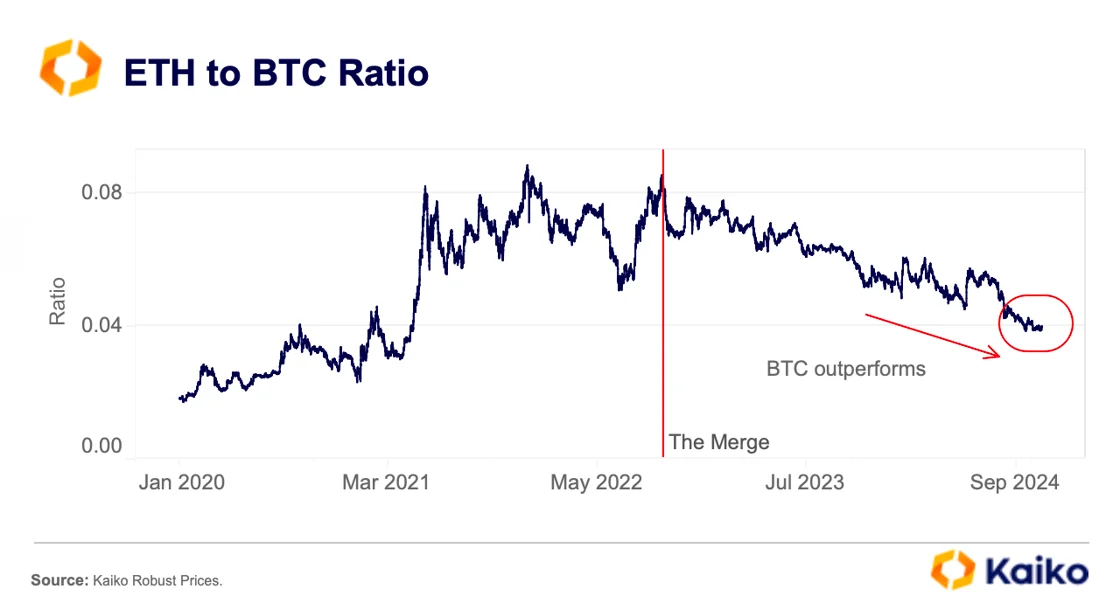
This structural shift is visible in the long-term performance relative to Bitcoin. While Bitcoin often acts as a macro hedge, Ethereum’s beta is increasingly determined by its ability to serve as the backbone for tokenized real-world assets and zero-knowledge verification systems. The ETH/BTC ratio has faced pressure as capital rotates into assets with clearer immediate yield or store-of-value narratives, but the underlying infrastructure upgrades continue to strengthen the network's capacity for high-throughput, low-cost verification.
For investors, the key is distinguishing between short-term volatility and long-term infrastructural adoption. The move toward Proof of Stake and subsequent scalability improvements reduces operational overhead, making Ethereum more attractive for enterprise-grade applications. This transition is not just technical; it is a regulatory and economic one, positioning Ethereum as the preferred chain for compliant digital asset settlement.
How to use ETH tools safely
Engaging with zero-knowledge infrastructure and cross-chain bridges requires precision. One misstep can result in irreversible loss. Start by selecting a wallet that supports EIP-1559 and allows clear transaction simulation. Avoid generic browser extensions for high-value holdings; use hardware solutions that isolate private keys from online threats. Ethereum.org provides the foundational guides for connecting securely to the network.
Next, choose bridges based on their security model, not just speed. Optimistic rollups and ZK-rollups operate on different trust assumptions. Verify the bridge’s code is audited and reviewed by reputable firms. Never interact with a bridge directly from an unverified link. Use official documentation or trusted aggregators like Ethereum.org to find verified pathways.
Finally, monitor your positions with live data. Static price checks are insufficient for high-stakes decisions. Use provider-backed widgets to track real-time market movements and gas fees. This ensures you execute transactions when costs are predictable and network congestion is low. Regular monitoring prevents slippage and protects against sudden volatility.
Choose a wallet that supports EIP-1559 and transaction simulation. For significant holdings, use a hardware device to keep private keys offline. This isolation is your primary defense against phishing and remote exploits.

Distinguish between optimistic and ZK-rollups. Ensure the bridge has undergone independent audits. Always access bridges through official Ethereum.org links or verified aggregators to avoid malicious front-ends.
Use provider-backed widgets for real-time gas fees and market prices. Static data is obsolete for execution. Monitoring live trends helps you time transactions to avoid high congestion and unexpected slippage.
Frequently asked questions about ETH infrastructure
Addressing common inquiries regarding Ethereum's security model, historical performance, and key industry figures helps clarify the distinction between technical reality and market speculation.
Helpful gear
Use these product recommendations as a starting point, then choose the size, material, and price point that fit how you actually use the gear.


As an Amazon Associate, we may earn from qualifying purchases.
No comments yet. Be the first to share your thoughts!