Why ethereum conspiracy theories matter now
Conspiracy theories about Ethereum are no longer just internet noise. In 2026, these narratives carry real weight because they intersect directly with market sentiment and regulatory scrutiny. When speculation about hidden agendas replaces factual analysis, it creates friction for developers, investors, and the broader ecosystem trying to build on a transparent protocol.
The current landscape is defined by a clash between decentralized ideals and centralized regulatory pressure. Ethereum co-founder Vitalik Buterin has openly criticized the SEC, describing the agency's approach as "gaslighting" in a recent lawsuit filed by Consensys. This legal battle highlights how misinformation and regulatory overreach are feeding into a narrative that the Ethereum Foundation operates in the shadows, despite its open-source nature.
These myths matter because they influence how institutions perceive risk. If the market believes that Ethereum's governance is controlled by a small, secretive group, capital flows may hesitate. Conversely, accurate information helps stabilize the market by grounding expectations in the actual mechanics of protocol upgrades and community governance.
Understanding the reality behind these conspiracy theories is essential for navigating the 2026 crypto market. It separates signal from noise, allowing stakeholders to make decisions based on protocol fundamentals rather than unfounded fears.
The SEC Security Classification Myth
The narrative that the SEC is quietly preparing to classify Ethereum as a security is one of the most persistent conspiracy theories in crypto. It suggests a secret, coordinated effort to strip ETH of its utility and force it into a regulatory straitjacket. While the tension between the Commission and the crypto industry is real, the idea of a covert "land grab" ignores the public, procedural nature of how securities laws are actually enforced.
Official statements from the SEC have not issued a definitive classification of ETH as a security. Instead, the agency has relied on the Howey Test framework, evaluating specific tokens on a case-by-case basis. In the absence of a formal rule or enforcement action targeting ETH directly, the "security" label remains a speculative assumption rather than a legal reality. The SEC has repeatedly stated that it is not targeting decentralization itself, but rather fraudulent offerings and unregistered exchanges.
"The SEC is gaslighting everyone about crypto." — Vitalik Buterin, Ethereum Co-founder
This sentiment, echoed by Vitalik Buterin, highlights the frustration many in the industry feel. However, conflating bureaucratic friction with a secret classification campaign is a mistake. The SEC’s actions are public, litigated, and often challenged in court. Consensys’ recent lawsuit against the SEC argues against unlawful overreach, but it does not prove a hidden agenda to classify ETH. It proves that the legal boundaries are being tested in open court, not behind closed doors.
The market’s reaction to SEC headlines often amplifies this fear, but the fundamentals of Ethereum’s development remain unchanged. The Ethereum Foundation continues to build, and the network’s decentralization has only increased. Treating regulatory uncertainty as a confirmed security classification leads to poor decision-making. The truth is less dramatic: the SEC is a slow-moving regulator, not a shadowy conspirator.
The Foundation Does Not Control Developers
It is a common misconception that the Ethereum Foundation (EF) acts as a central command center for Ethereum development. This narrative suggests that the EF hires all the engineers, dictates the roadmap, and forces consensus on changes. In reality, the Ethereum network operates as a decentralized open-source project, and the Foundation’s role is fundamentally different from that of a traditional tech company.
The Ethereum Foundation is a non-profit organization that provides grants, coordinates conferences, and supports research. It does not employ the vast majority of the core developers working on the Ethereum protocol. Engineers at major infrastructure providers like ConsenSys, PegaSys, and various independent research groups contribute to the codebase on their own terms. These developers are not employees of the Foundation, and they are not paid by it to write specific code. Their contributions are driven by technical interest, community reputation, and the incentives of the broader ecosystem.
While the Foundation may fund specific research initiatives or grant programs, this financial support does not equate to control. Developers are free to reject proposals, fork the code, or work on entirely different chains if they disagree with the direction of the network. The actual governance of Ethereum happens through a decentralized process involving client teams, validators, and users. No single entity, including the Foundation, can unilaterally change the protocol.
The idea of a centralized "Ethereom payroll" ignores the complex, multi-party nature of open-source development. Code changes are proposed, debated, and tested by a global community of contributors. The Foundation acts as a facilitator and steward, not a manager. Understanding this distinction is essential for recognizing how Ethereum’s security and decentralization are maintained.
The Merge Wasn't a Glitch—It Was a Stress Test
The transition from Proof of Work to Proof of Stake was the most complex software upgrade in blockchain history. Fears of hidden vulnerabilities or catastrophic backdoors were pervasive, but the reality was a meticulously engineered shift. The Ethereum Foundation didn't just flip a switch; they built a system designed to fail safely, ensuring that consensus rules remained immutable even under extreme network load.
Independent verification played a crucial role in dispelling conspiracy theories. Firms like Antithesis conducted formal verification and fuzzing tests on the core clients, simulating millions of scenarios to identify potential edge cases. Their findings confirmed that the protocol logic held up under stress, validating the security assumptions made by developers. This wasn't a blind leap of faith; it was a mathematically verified transition.
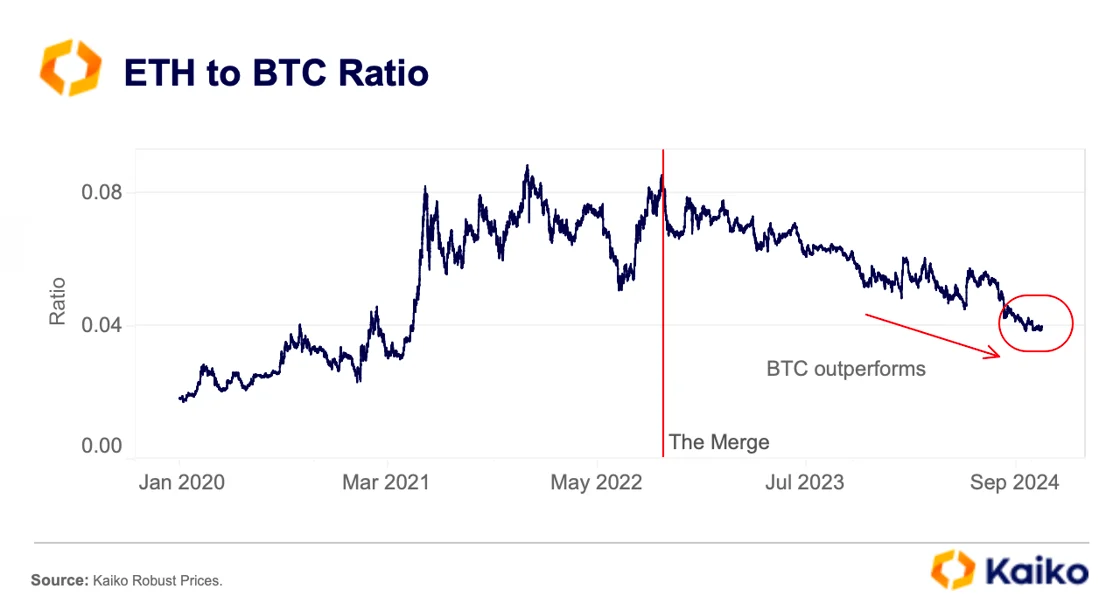
The market has since absorbed the change, with Ethereum settling into a new equilibrium. The post-merge stability is evident in the chart above, showing consistent block production and finality times. While the ETH/BTC ratio has fluctuated due to broader market dynamics, the underlying infrastructure has proven robust. The network continues to process transactions without the energy-intensive mining rigs, yet maintains the same level of decentralization and security.
Market signals versus viral hoaxes
Ethereum’s price action and on-chain data provide a clear, if sometimes noisy, picture of network health. In contrast, viral hoaxes often rely on shocking visual anomalies—like a massive transaction sent to a burn address—to manufacture urgency. Distinguishing between the two requires looking past the headline and checking the underlying data.
The Burn Address Myth
A common conspiracy narrative involves large ETH transfers to the "burn address" (0x000...dead), claiming these are secret signals or malicious acts. In reality, these are often misinterpreted user errors, test transactions, or deliberate marketing stunts. While burning ETH is a real mechanism in Ethereum’s deflationary model, a single large burn does not predict future price direction. It is a statistical event, not a signal.
Reading Real Market Indicators
Legitimate market research focuses on metrics that reflect actual network usage and economic incentives. Key indicators include:
- Gas Fees: Reflects network congestion and demand for block space.
- Staking Rates: Shows the percentage of ETH locked in the consensus layer.
- Active Addresses: Indicates genuine user participation.
- Exchange Flows: Tracks movement between exchanges and cold storage.
These metrics are publicly available on official Ethereum explorers and reputable data aggregators. They require context and time to interpret, unlike the instant gratification of a viral hoax.
Why Hoaxes Spread
Hoaxes spread because they are simple. A single number, like "$1.3M burned," is easier to share than a nuanced explanation of gas fee dynamics. Conspiracy theories fill the void left by complex data. They offer a narrative of hidden control or imminent change, which is emotionally compelling but factually empty.
How to Verify
Before sharing a shocking market claim, check the source. Official Ethereum documentation, verified developer blogs, and primary on-chain data are the only reliable sources. If a claim comes from an anonymous Twitter account or a clickbait headline, it is likely noise. Always cross-reference with on-chain data before forming an opinion.
No comments yet. Be the first to share your thoughts!