Why crypto conspiracy theories thrive
The "ETH conspiracy" narrative often starts with a simple observation: the market moves in ways that feel intentional. When Ethereum's price drops 10% in an hour, it is easy to blame a coordinated attack rather than a cascade of liquidations or a single large sell order. This cognitive bias is not unique to crypto; it is a human tendency to seek a villain when the underlying mechanics are complex and opaque.
Information asymmetry drives much of this speculation. Unlike traditional markets with strict reporting requirements, on-chain data is public but rarely interpreted correctly by the average observer. A large transfer to an exchange looks like a sell-off, but it might be a deposit for a staking withdrawal or a bridge to a decentralized exchange. Without understanding the context, observers fill the gaps with speculation.
Even industry insiders acknowledge these perceptions. Ethereum co-founder Joseph Lubin has publicly stated that whales are manipulating the price of ETH by taking advantage of economic turmoil, validating the concern while also highlighting the reality of large-holder influence. Meanwhile, Vitalik Buterin has addressed the surge in institutional demand, noting that fundamental shifts often get misinterpreted as coordinated market rigging.
The result is a feedback loop where every market dip reinforces the belief in a hidden hand. Separating on-chain data from this noise requires looking past the headline price action and understanding the actual flow of assets. Until then, the "ETH conspiracy" will remain a convenient explanation for the inherent volatility of a young, global financial system.
Whale Manipulation vs. Institutional Demand
The narrative that large holders, or "whales," are manipulating Ethereum's price has gained traction, particularly following comments from co-founder Joseph Lubin. Lubin argues that these large entities exploit economic turmoil to drive volatility, creating a market environment that feels rigged to the average investor. This perspective suggests that price action is often a result of concentrated selling pressure rather than organic market discovery.
However, attributing ETH's price movements solely to whale manipulation overlooks the structural shift toward institutional adoption. According to Ethereum co-founder Vitalik Buterin, the recent surge in demand is driven by fundamental shifts, including a more crypto-friendly regulatory environment and the integration of institutional capital. The entry of major financial players and the approval of spot Ethereum ETFs have introduced a new layer of demand that operates independently of retail speculation or whale dumps.
To understand the current market dynamic, it is helpful to compare the characteristics of these two forces. While whale activity tends to be episodic and reactive, institutional flows represent a steady, long-term accumulation strategy.
| Market Driver | Behavior Pattern | Price Impact | Time Horizon |
|---|---|---|---|
| Whale Activity | Reactive & Episodic | Short-term Volatility | Hours to Days |
| Institutional Demand | Strategic & Accumulative | Long-term Trend | Months to Years |
The presence of live market data helps contextualize these claims. When ETH prices fluctuate, it is often a combination of both factors: short-term noise from large holders and the underlying gravity of institutional interest.
Technical signals override rumor mills
Conspiracy narratives thrive on ambiguity, but technical analysis cuts through the noise with binary outcomes. When ETH price action is tangled in speculation, on-chain metrics and chart structures provide the only objective evidence available to traders. Relying on unverified rumors is like navigating a storm without a compass; relying on price action is like following the stars.
The current monthly chart for ETH shows a death cross, a bearish signal that often precedes extended periods of underperformance. This technical formation suggests that momentum is shifting downward, regardless of the social media chatter. Breaking above key support levels, such as the $3,300 mark, would be the first concrete sign that the bearish structure is failing. Until that level is reclaimed, the chart remains the primary authority on market direction.
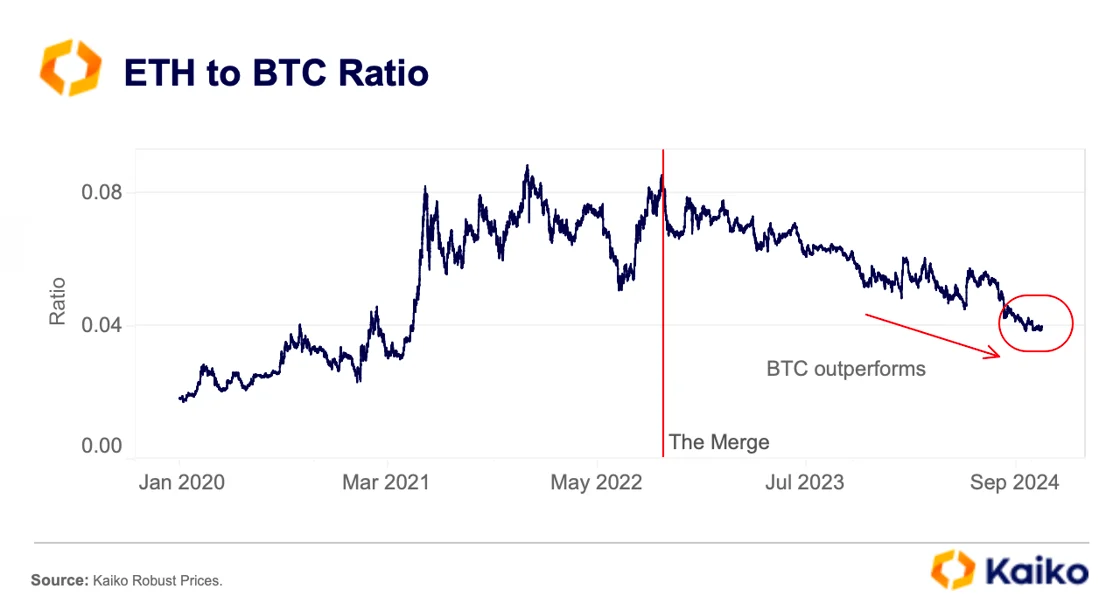
While conspiracy theories focus on hidden agendas, technical analysis focuses on visible supply and demand. The ETH/BTC ratio chart below illustrates this divergence. Even when broader narratives suggest a comeback, the ratio often reveals that Ethereum is lagging behind Bitcoin in relative strength. This data point is more telling than any anonymous tip.
The Myth of Regulatory Favoritism
The "Ethgate" narrative suggests a coordinated effort by regulators to hand-pick Ethereum as the sole beneficiary of institutional adoption, while actively suppressing competitors like XRP and Stellar Lumens (XLM). This theory posits that regulatory actions are not based on legal merit but on a hidden agenda to consolidate power within a single ecosystem. While this story offers a convenient scapegoat for market volatility, it collapses under scrutiny of official regulatory filings and legal precedents.
Regulatory agencies, including the SEC and CFTC, operate under statutory frameworks that apply to all digital assets equally. The classification of assets as securities or commodities depends on the Howey Test and other legal standards, not on the identity of the project. For instance, Bitcoin and Ethereum were treated differently in early enforcement actions not because of favoritism, but because of their distinct technological structures and initial funding mechanisms. This distinction is a matter of legal interpretation, not political preference.
Dmitry Buterin has addressed these conspiracy theories directly, noting that the surge in institutional demand for ether is driven by fundamental shifts in utility, such as staking and network upgrades, rather than regulatory manipulation. The market’s reaction to regulatory news is often emotional, but the underlying data shows that institutional adoption is following the path of least resistance and highest utility, which happens to align with Ethereum’s current development trajectory. This is a market-driven phenomenon, not a state-sponsored one.
To understand the real drivers of the market, it helps to look at the technical and price action rather than speculative narratives. The following chart illustrates Ethereum’s price movement, reflecting genuine market dynamics rather than regulatory whims.
Spotting scams on the Ethereum network
While market manipulation conspiracies dominate headlines, the most immediate financial threat on Ethereum comes from scam tokens. Research from Georgia Tech and arXiv indicates that billions of dollars in illicit profits are distributed through counterfeit tokens, often exploiting new users who lack technical verification skills. Understanding how to audit a contract is the only reliable defense against these on-chain risks.
Always check the contract address on Etherscan. Look for the "Contract" tab and verify that the source code is verified. If the code is hidden or marked as "Unverified," treat the token as high-risk. Legitimate projects publish their code for public audit, while scam tokens often rely on obfuscation to hide malicious functions like hidden minting or transfer restrictions.

Analyze the token's liquidity pool. Scam tokens often have low liquidity or liquidity that can be removed by the owner at any moment. Additionally, check if the contract ownership is renounced. If the owner retains control, they can modify tax rates, pause transactions, or blacklist wallets, effectively trapping your funds.

Before swapping, paste the contract address into tools like Token Sniffer or GoPlus Security. These scanners automatically detect common malicious patterns, such as honeypots (tokens you can buy but not sell) or hidden mint functions. A green score from these tools is not a guarantee of safety, but a red flag is a definitive reason to walk away.
By following these steps, you shift from passive speculation to active verification. This approach protects your capital from the $2 billion in illicit profits that Georgia Tech researchers identified as circulating on the network, ensuring you focus on genuine market movements rather than avoiding engineered traps.
No comments yet. Be the first to share your thoughts!