Ethereum as the institutional settlement layer
For years, the conversation around Ethereum has been dominated by retail speculation, meme coins, and the volatility of decentralized finance. But beneath that noise, a quieter, more structural shift is underway. Former BlackRock executive Joseph Chalom has articulated a thesis that reframes Ethereum not as a speculative asset, but as the underlying infrastructure for traditional finance. This perspective aligns with the growing narrative that real-world assets (RWA) are reshaping DeFi by bringing institutional-grade settlement to a blockchain-native world.
Chalom’s argument is straightforward: Ethereum is becoming the digital equivalent of the settlement layers that Wall Street has relied on for decades. Just as traditional finance uses centralized ledgers to clear and settle transactions, Ethereum provides a decentralized, transparent, and immutable ledger that can handle similar workloads with greater efficiency and lower counterparty risk. This isn’t just about tokenizing assets; it’s about migrating the core plumbing of finance to a network that is open, programmable, and globally accessible.
The implications of this shift are profound. Real-world assets—such as treasury bills, real estate, and private credit—are increasingly being issued on Ethereum. This trend is driven by the desire for 24/7 settlement, fractional ownership, and programmable compliance. Institutions are no longer just experimenting; they are building. BlackRock’s own BUIDL fund, which tokenizes U.S. Treasury bills on Ethereum, is a prime example of this institutional adoption. It demonstrates that the blockchain can serve as a reliable settlement layer for assets that have traditionally been locked in opaque, slow-moving systems.
This transition is not without its challenges. Scalability, regulatory clarity, and user experience remain hurdles. However, the momentum is undeniable. As more institutions recognize Ethereum’s potential as a settlement layer, the network’s role in the global financial system will likely expand. This is not an eth conspiracy infrastructure; it is a pragmatic evolution of finance, leveraging technology to make markets more efficient, transparent, and inclusive.
Why institutions prefer Ethereum over competitors
The narrative that Ethereum is the "only chain institutions can trust" isn't marketing hype; it's a reflection of its entrenched security and legal clarity. For real-world assets (RWA), the margin for error is near zero. Institutions are not looking for the fastest transaction speed; they are looking for the most immutable settlement layer. Ethereum's transition to Proof-of-Stake (PoS) has fundamentally reshaped its infrastructure, making it more energy-efficient while maintaining the highest level of security in the blockchain space.
Security and Decentralization
The core advantage lies in Ethereum's sheer scale of validators. With thousands of independent nodes securing the network, the risk of a 51% attack is statistically negligible compared to smaller layer-1 competitors. This decentralization is critical for institutions dealing with high-value real-world assets. A centralized or less decentralized chain poses a single point of failure that no compliant institution can accept. Ethereum's architecture ensures that no single entity can alter the ledger, providing the auditability required by traditional finance.
Legal Clarity and Compliance
Beyond technical specs, Ethereum benefits from a mature ecosystem of legal precedents. Regulators in the US and EU have increasingly recognized ETH as a commodity, providing a clearer regulatory path than many newer, more ambiguous chains. This clarity reduces compliance overhead for institutions issuing tokenized assets. When legal frameworks are established, the cost of entry for institutional players drops significantly, accelerating adoption.
Comparison: Ethereum vs. Competitors
The following table highlights why Ethereum remains the preferred choice for institutional RWA integration compared to other major layer-1 blockchains.
| Network | Security Model | Validator Count | Institutional Fit |
|---|---|---|---|
| Ethereum | Highest (PoS, ~900k+ validators) | High | Best (Legal clarity, deep liquidity) |
| Solana | Moderate (Outages in past) | Medium | Good (Speed), but legal ambiguity |
| Polygon | High (PoS sidechain) | Medium | Good (EVM compatible), but dependent on Ethereum |
| Avalanche | High (Subnets) | Medium-High | Good (Customizability), but fragmented liquidity |
Market Context
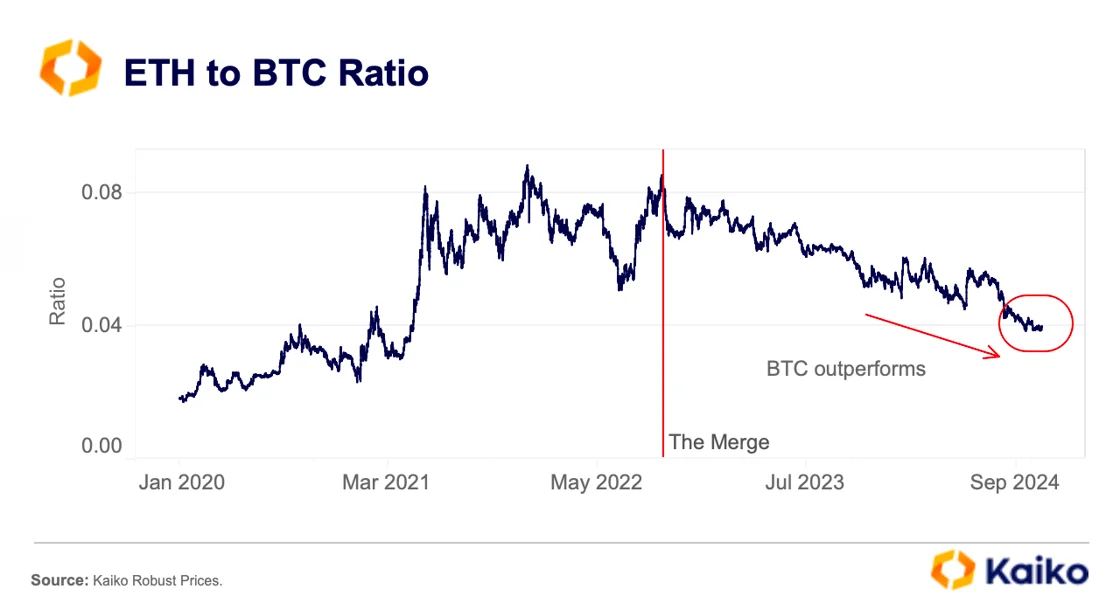
The institutional shift toward Ethereum is also reflected in market dynamics. As real-world assets move on-chain, the demand for secure, compliant infrastructure drives ETH's utility. This is not just about speculation; it's about the underlying plumbing of global finance.
Real-world assets driving the next bull cycle
Use this section to make the Ethereum Infrastructure decision easier to compare in real life, not just on paper. Start with the reader's actual constraint, then separate must-have requirements from details that are merely nice to have. A practical choice should survive normal use, maintenance, timing, and budget. If a recommendation only works in an ideal situation, call that out plainly and give the reader a fallback path.
The simplest way to use this section is to write down the must-have criteria first, then compare each option against those criteria before weighing nice-to-have features.
Regulatory clarity and the SEC's Ethereum nod
Use this section to make the Ethereum Infrastructure decision easier to compare in real life, not just on paper. Start with the reader's actual constraint, then separate must-have requirements from details that are merely nice to have. A practical choice should survive normal use, maintenance, timing, and budget. If a recommendation only works in an ideal situation, call that out plainly and give the reader a fallback path.
The simplest way to use this section is to write down the must-have criteria first, then compare each option against those criteria before weighing nice-to-have features.
Building for utility, not just speculation
Use this section to make the Ethereum Infrastructure decision easier to compare in real life, not just on paper. Start with the reader's actual constraint, then separate must-have requirements from details that are merely nice to have. A practical choice should survive normal use, maintenance, timing, and budget. If a recommendation only works in an ideal situation, call that out plainly and give the reader a fallback path.
The simplest way to use this section is to write down the must-have criteria first, then compare each option against those criteria before weighing nice-to-have features.
Strategic checklist for DeFi investors
Use this section to make the Ethereum Infrastructure decision easier to compare in real life, not just on paper. Start with the reader's actual constraint, then separate must-have requirements from details that are merely nice to have. A practical choice should survive normal use, maintenance, timing, and budget. If a recommendation only works in an ideal situation, call that out plainly and give the reader a fallback path.
-
Verify the basicsConfirm the core specs, condition, and fit before comparing extras.
-
Price the downsideLook for the repair, maintenance, or replacement cost that would change the decision.
-
Compare alternativesCheck at least two comparable options before treating one listing as the benchmark.
No comments yet. Be the first to share your thoughts!