Defining the ethereum narrative
The phrase "ETH Conspiracy" does not describe a coordinated criminal plot or a literal cabal operating in the shadows. Instead, it is a market narrative used by critics to frame perceived regulatory capture and unfair market advantages. Understanding this distinction is essential for separating emotional speculation from the structural realities of the Ethereum ecosystem.
This narrative gained traction during the "ETHGate" controversy of 2022, where critics argued that Ethereum received a regulatory "free pass" compared to other assets like XRP. The theory suggests that the Ethereum Foundation and Vitalik Buterin maintain undue influence over regulatory bodies, allowing the network to avoid the strict securities classification applied to competitors. While these critics raise valid concerns about market fairness, the claim of a criminal conspiracy lacks evidence.
Vitalik Buterin has publicly addressed these claims, dismissing them as misunderstandings of how regulatory engagement works. He notes that developers interacting with policymakers is standard practice in any large technology sector, not a unique mechanism for market manipulation. The "conspiracy" is better understood as a clash of interpretations regarding how decentralized networks should be regulated, rather than proof of illicit coordination.
The core of the debate is not about a secret plot, but about the tension between rapid technological innovation and slow-moving regulatory frameworks. When markets perceive a lack of clear rules, narratives fill the void. The "ETH Conspiracy" is a symptom of this uncertainty, reflecting investor anxiety about regulatory risk rather than evidence of a coordinated effort to rig the system.
Tracking Layer Two Scaling Costs
Layer 2 solutions are often sold as the fix for Ethereum's congestion, but the infrastructure reality is more nuanced than the marketing suggests. The "hype" centers on near-zero fees and instant transactions, yet the actual economic trade-offs depend heavily on how you define cost and security. When analyzing these networks, we must look beyond the headline numbers to understand the underlying mechanics of data availability, finality, and security assumptions.
The cost of a transaction on a Layer 2 is not just a simple gas fee; it is a composite of execution costs, data availability fees, and potential bridge risks. While most L2s offer fees that are a fraction of mainnet Ethereum, the security model varies significantly. Optimistic rollups assume validity unless challenged, requiring a 7-day dispute period for full finality. ZK-rollups, by contrast, use cryptographic proofs to guarantee validity instantly, but the computational cost of generating these proofs can sometimes offset the savings on data storage.
To understand the current landscape, we need to compare the key metrics that actually matter to users and developers. The following table breaks down the primary differences in fees, finality, and security models across the major Ethereum Layer 2 networks. This comparison highlights that "cheaper" does not always mean "better" when considering the trade-off between speed and decentralization.
The data above reveals a clear dichotomy: Optimistic rollups offer the lowest fees but require a waiting period for withdrawals to be fully secure, while ZK-rollups provide faster finality at a slightly higher cost. This trade-off is critical for applications that value speed over minimal cost, such as gaming or high-frequency trading, versus those prioritizing absolute minimal expense, like simple token transfers. Understanding these distinctions is essential for separating the infrastructure reality from the marketing hype.
The SEC's jurisdictional land grab
The conflict between Ethereum’s creators and the Securities and Exchange Commission is no longer just a debate over semantics; it is a battle over who controls the network’s future. Joe Lubin, Ethereum’s co-founder, has characterized the SEC’s aggressive stance as "gaslighting," arguing that the regulator is attempting an unlawful land grab to assert jurisdiction over a decentralized protocol that predates modern securities laws.
"Consensys' lawsuit alleges that the SEC is making an unlawful land grab in its pursuit of jurisdiction over Ethereum. But to what end?" — Joe Lubin, Ethereum Co-founder
This legal friction centers on a fundamental disagreement about classification. The SEC, under former Chair Gary Gensler, has maintained that many crypto assets, including Ethereum, should be treated as securities. This classification subjects them to rigid registration and disclosure requirements designed for traditional stock markets. However, Ethereum’s developers and supporters argue that ETH functions as a commodity, similar to gold or oil, whose value is derived from its utility as the fuel for a global computing network rather than the efforts of a central promoter.
The practical implications of this classification are severe. If the SEC successfully enforces its securities narrative, it could restrict how Ethereum is traded, developed, and used, effectively forcing a centralized choke point onto a decentralized infrastructure. The ongoing investigation into crypto companies’ dealings with Ethereum highlights the regulator’s intent to demand financial records and control the narrative around the asset’s nature.
Evaluating whale manipulation risks
The narrative that large holders and exchanges systematically manipulate Ethereum prices is a persistent fear in crypto markets. This sentiment often stems from visible volatility spikes that coincide with the movement of significant token balances. While these patterns can feel coordinated, distinguishing between genuine market manipulation and standard institutional liquidity management requires looking at on-chain data rather than social media speculation.
On-chain analysis reveals that whale activity often correlates with broader market trends rather than driving them in isolation. Large wallets frequently rebalance portfolios or move funds between exchanges for custody or staking purposes, actions that can temporarily impact order books. For institutional investors, the primary risk is not a coordinated conspiracy to crash prices, but rather the liquidity gaps that appear when multiple large players adjust positions simultaneously.
To assess this risk, it is useful to visualize price action alongside known whale wallet movements. The chart below shows recent ETH price action. By observing how the asset reacts to large transfers, investors can better gauge whether price moves are driven by fundamental supply/demand shifts or sudden liquidity events.
While manipulation concerns are valid, the scale of actual illicit activity on Ethereum remains a smaller fraction of total volume compared to legitimate trading. Research by Georgia Tech has identified billions in illicit profits on the network, highlighting that while fraud exists, it is distinct from the broader market dynamics driven by institutional whales. Institutional due diligence should focus on monitoring exchange inflows/outflows and derivative open interest to understand the true liquidity landscape, rather than attributing every price drop to malicious intent.
On-chain scam flows
Ethereum’s infrastructure supports legitimate innovation, but it also hosts significant illicit activity. Researchers at Georgia Tech identified $2 billion in illicit profits distributed across 91 digital wallets on the Ethereum blockchain. This finding underscores that the same networks enabling decentralized finance are simultaneously used to launder and obscure stolen funds.
Tracking these flows requires more than surface-level analysis. Scammers use complex mixing services and cross-chain bridges to obscure the origin of funds. The scale of these operations demonstrates that infrastructure neutrality is a myth; the tools built for privacy and efficiency are often weaponized for fraud.
Final infrastructure risk checklist
Conspiracy theories thrive on opacity. When you cannot see who controls the nodes, how the code is funded, or who holds the keys, the gap is filled with speculation. This checklist replaces rumor with verifiable infrastructure metrics. Use these five steps to audit your Ethereum exposure before making any moves.

Centralization is the root of many conspiracy claims. Check the percentage of validators running on a single cloud provider or hardware vendor. If more than 30% of the network relies on one infrastructure stack, you hold concentrated risk regardless of the narrative.

Transparency in funding prevents hidden influence. Look at the Ethereum Foundation’s quarterly reports and public grants. If development is heavily reliant on a single exchange or a small group of whale-funded entities, the protocol’s direction may shift to serve their interests rather than the network’s stability.

Regulatory arbitrage is a common vulnerability. Determine where your node operators and key developers are legally domiciled. If the core team is based in a jurisdiction with aggressive securities laws, your holdings face immediate legal risk, regardless of the technology’s merits.
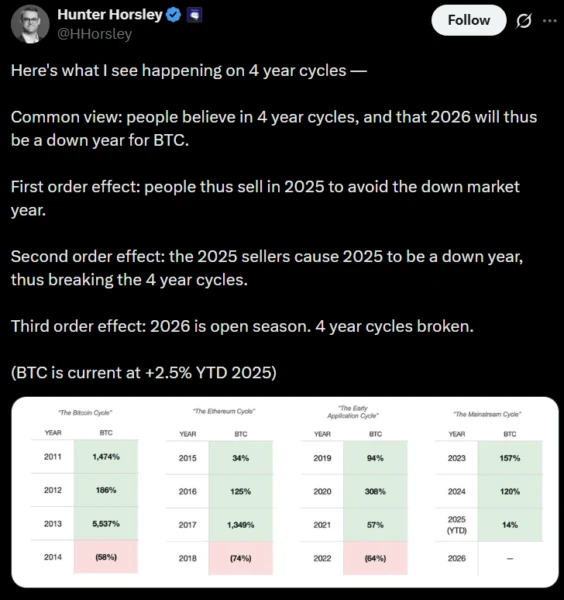
Manipulation is often visible in on-chain data. Track the top 100 non-exchange wallets. If these entities are consistently moving large sums to centralized exchanges or using high-leverage positions, the market is susceptible to coordinated dumps that rumors cannot explain.
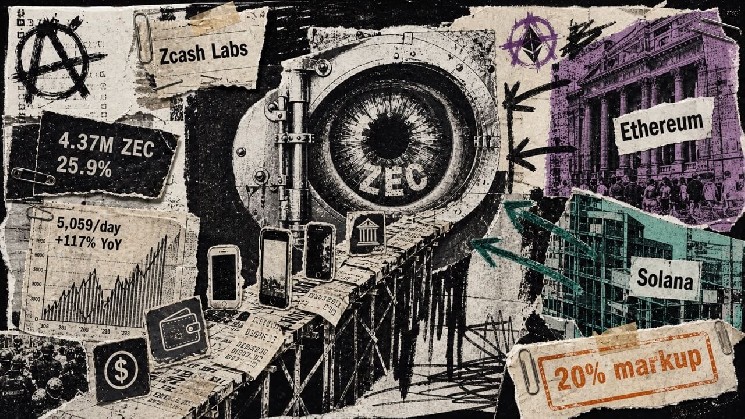
Low participation signals weak community ownership. Check the percentage of staked ETH that actively votes on EIPs. If governance is dominated by a few large staking pools, the network’s evolution is effectively controlled by a small group, validating fears of centralization.
Use this framework to separate structural weakness from market noise. If your audit reveals high centralization, opaque funding, or low governance participation, your risk is real. If the infrastructure is robust, the conspiracy theories are just that—noise.
Common ethereum questions answered
Investors often conflate market volatility with structural failure. These questions address the most persistent rumors and technical realities surrounding Ethereum.
Why is Ethereum crashing now?
Price drops are usually driven by macroeconomic liquidity conditions or profit-taking after rallies, not a collapse of the network itself. Ethereum’s underlying infrastructure remains active, with transaction throughput and validator participation continuing to grow regardless of short-term price action.
Will Ethereum ever hit $10,000?
Predictions of a $10,000 price target rely on assumptions about global money supply expansion and institutional adoption. While the network’s utility is expanding, no one can guarantee specific price levels. Market cycles dictate that such targets depend heavily on broader economic liquidity rather than just technological upgrades.
Does Donald Trump own Ethereum?
No. Donald Trump does not own Ethereum. He owns Bitcoin, which is a separate cryptocurrency. Ethereum is a decentralized protocol owned by no single entity. This confusion often arises because Trump has publicly embraced Bitcoin since 2024, but he has no claim or ownership stake in the Ethereum network or its code.
What crypto is Ethereum killer?
Several blockchains like Solana and Avalanche compete for developers and users, but none have fully "killed" Ethereum. Ethereum remains the dominant platform for decentralized finance and stablecoins. Competition drives innovation, but Ethereum’s massive network effect and layer-2 scaling solutions keep it at the center of the ecosystem.
No comments yet. Be the first to share your thoughts!